HOURS
The N.C. Maritime Museum, located at 315 Front St. in downtown Beaufort, and the Harvey W. Smith Watercraft Center, located across the street from the museum, are open year-round on the following schedule:
Tuesday – Saturday: 10 a.m. to 5 p.m.
It is closed on Sundays, Mondays and state holidays.
Admission is free. Donations are appreciated.
There’s always something happening at the N.C. Maritime Museum!
The North Carolina Maritime Museum at Beaufort reflects coastal life and interprets lighthouses and lifesaving stations, the seafood industry, motorboats, and more. Studies in marine life, science, and ecology are available for all ages. The Beaufort museum is the repository for artifacts from Blackbeard’s wrecked flagship, Queen Anne’s Revenge, among them cannons, grenades, belt buckles and beads. The Harvey W. Smith Watercraft Center teaches boatbuilding for all ages.
The Harvey W. Smith Watercraft Center
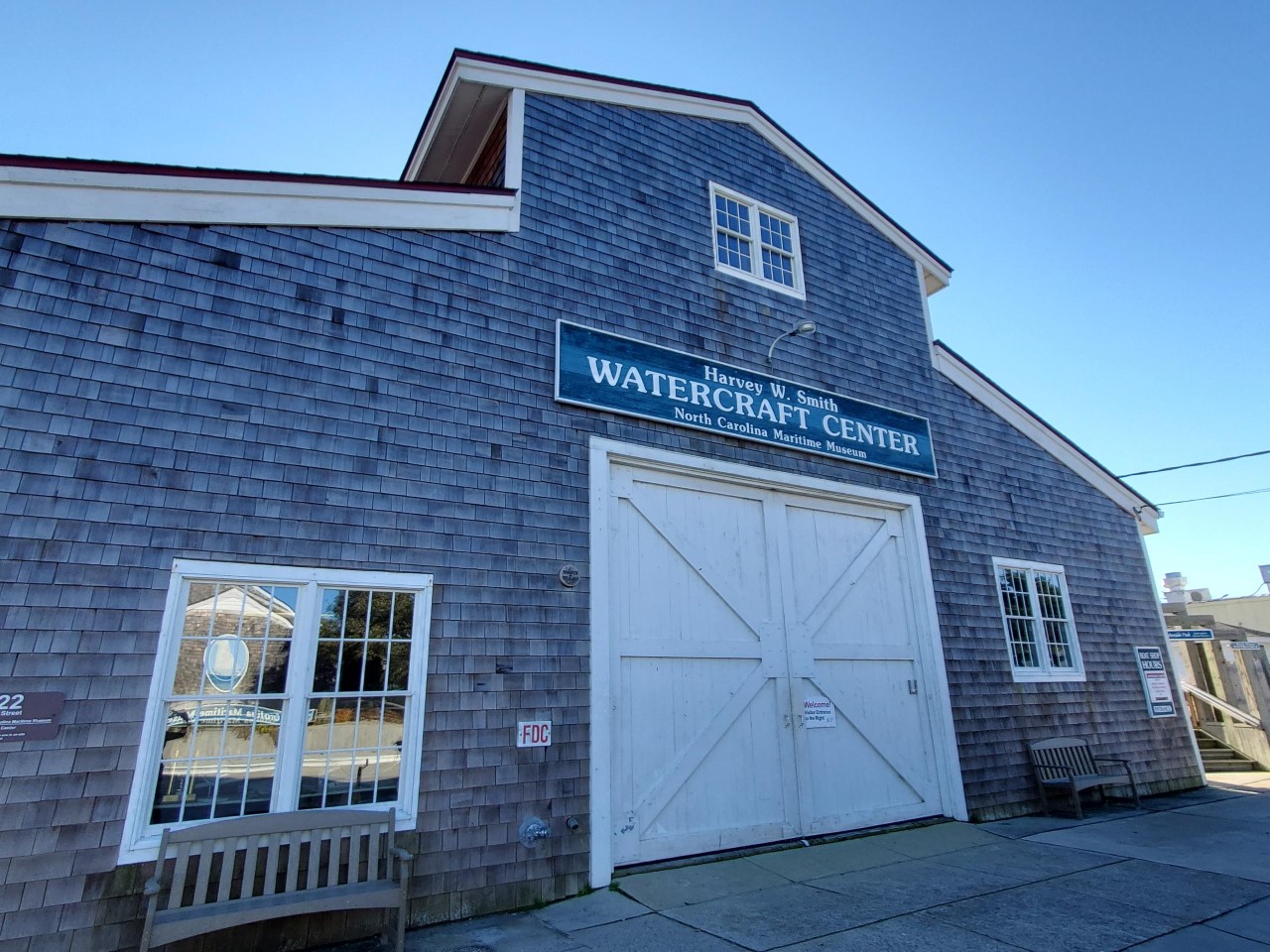 In 1980, Harvey W. Smith’s widow Mrs. Evelyn Smith donated property on Front Street for the building of a new museum to replace the Hampton Mariners Museum That facility had outgrown its location on Turner Street. At that time, first time museum curator Charles R. McNeill was offered anything the museum could use by Mrs. Smith from her late husband’s maritime collection. That was the beginning of the North Carolina Maritime Museum as we know it today.
The museum’s Watercraft Center sits on Taylors Creek, across from the North Carolina Maritime Museum. Today, locals, visitors and boaters alike are encouraged to watch, and take boatbuilding courses offered throughout the year for all skill levels.
North Carolina Department of Natural and Cultural Resources
The museum is one of seven regional history museums within the Division of State History Museums under the North Carolina Department of Natural and Cultural Resources. DNCR manages, promotes, and enhances the things that people love about North Carolina: its diverse arts and culture, rich history, and spectacular natural areas. At more than 100 sites across the state, the department enhances education, stimulates economic development, improves public health, expands accessibility, and strengthens community resiliency.
NCDNCR includes 27 historic sites, seven history museums, two art museums, two science museums, three aquariums and Jennette’s Pier, 39 state parks and recreation areas, the N.C. Zoo, the nation’s first state-supported Symphony Orchestra, the State Library, the State Archives, the N.C. Arts Council, State Preservation Office and the Office of State Archaeology, along with the Division of Land and Water Stewardship.